
Brandon Clarke death cause
Wednesday, May 14, 2026 Trusted by millions worldwide Back to News Sports By Ali Aslam NBA in Shock: Memphis Grizzlies...
Read More → Thunder vs Lakers game analysis with tactical breakdown, key matchups, and prediction. Can Lakers slow OKC’s pace in this crucial Western clash?
The tension surrounding a Thunder vs Lakers game analysis isn’t just about a single matchup it’s about two franchises moving in opposite competitive arcs, colliding at a moment when every possession carries postseason implications. On one side, Oklahoma City’s youthful, high-tempo machine continues to outpace expectations. On the other, Los Angeles leans on experience, legacy, and urgency as the margin for error tightens.
This isn’t merely a Western Conference fixture. It’s a referendum on contrasting basketball ideologies development versus immediacy, fluidity versus control.
The Oklahoma City Thunder vs Los Angeles Lakers preview reflects broader structural differences. Oklahoma City has spent the past few seasons quietly assembling one of the league’s most dynamic young cores. Meanwhile, the Lakers remain anchored to the championship window defined by LeBron James, where each season is judged in binary terms: contention or failure.
Historically, the Thunder vs Lakers head-to-head record has swung with roster eras. The Kevin Durant–Russell Westbrook Thunder once dominated stretches of this rivalry. Today, however, the balance feels more fluid less about legacy, more about execution in the present moment.
Notably, the stakes are asymmetric. For Oklahoma City, games like this validate their rise. For Los Angeles, they expose fragility.
At the heart of any Lakers vs Thunder full game breakdown lies Oklahoma City’s offensive tempo. The Thunder thrive on pace—quick ball movement, rapid transitions, and positional versatility. Their system is less rigid playbook, more organized chaos.
Central to this is Shai Gilgeous-Alexander, whose ability to manipulate defenders has redefined the Thunder’s half-court offense. His scoring isn’t explosive in bursts it’s relentless, incremental, and efficient.
The Shai Gilgeous-Alexander performance stats tell only part of the story. What’s more significant is his control of rhythm. He dictates when the game accelerates and when it slows, often neutralizing veteran defenses through patience rather than speed.
Consequently, the Thunder pace and scoring trends show a team comfortable playing at the edge fast, but not reckless
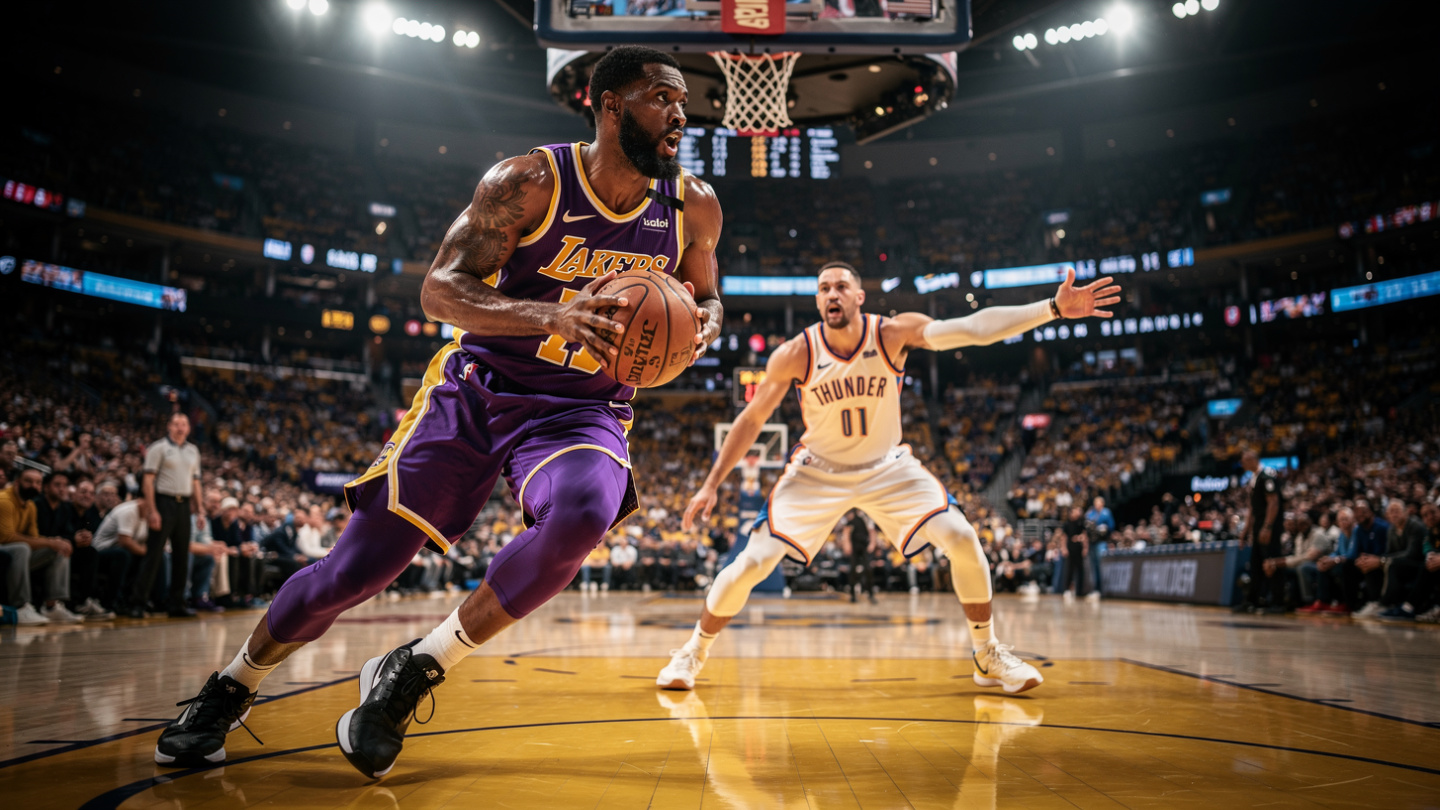
In contrast, the Lakers operate best when they impose structure. The Lakers defense vs Thunder offense dynamic becomes the defining battleground. Los Angeles cannot match Oklahoma City’s pace over four quarters; instead, they aim to disrupt it.
This is where LeBron James’ impact vs Thunder becomes decisive. Even at this stage of his career, his game intelligence remains unmatched. He slows tempo, orchestrates half-court sets, and exploits mismatches with surgical precision.
However, the challenge is sustainability. The Lakers’ reliance on half-court execution demands near-perfect efficiency. Any lapse turnovers, missed rotations quickly turns into transition opportunities for Oklahoma City.
Meanwhile, Los Angeles’ defensive scheme must collapse driving lanes without overcommitting. That balance is notoriously difficult against a team built on spacing and penetration.
The Lakers vs Thunder key players matchup isn’t just star power it’s stylistic contrast.
Interestingly, their influence extends beyond scoring. Both dictate team identity. When SGA accelerates, the Thunder become uncontainable. When LeBron slows the game, the Lakers regain composure.
The Thunder lineup vs Lakers typically emphasizes versatility multiple ball handlers, switchable defenders, and spacing across positions. This allows Oklahoma City to adapt mid-possession, often confusing defensive assignments.
Conversely, the Lakers lineup vs Thunder leans on physicality and interior presence. Their advantage lies in size, rebounding, and second-chance points. However, that same size can become a liability when forced into perimeter rotations.
Therefore, the outcome often hinges on which team successfully imposes its structural strengths
The Thunder latest performance NBA trajectory reflects a team growing in confidence. They’ve shown resilience in close games and consistency against both elite and mid-tier opponents.
Notably, their improvement isn’t linear it’s exponential. Each month reveals new layers: improved defense, smarter shot selection, better late-game execution.
This progression signals something deeper than form. It suggests sustainability.
Meanwhile, the Lakers recent form analysis paints a more volatile picture. At their best, they still resemble contenders dominant in stretches, defensively cohesive, offensively efficient.
However, inconsistency remains their defining weakness. Fatigue, injuries, and reliance on veteran production create fluctuations in performance.
The Lakers playoff push performance adds another layer of pressure. Every game carries implications, and urgency often forces tactical compromises.
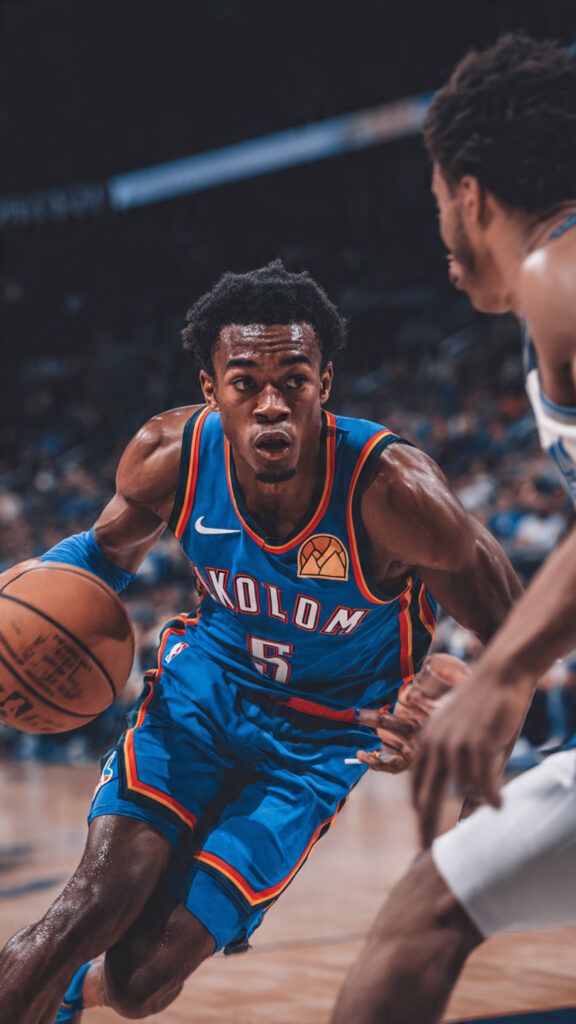
Much of the NBA Western Conference matchup analysis focuses on star narratives LeBron’s longevity, SGA’s breakout season. While valid, this framing overlooks a critical structural shift.
Oklahoma City isn’t just a rising team they’re redefining team-building philosophy. Their emphasis on positional fluidity, decision-making, and adaptability reflects the league’s evolving direction.
This matchup carries implications far beyond standings.
Moreover, the NBA game tactical breakdown reveals a league in transition. Speed, spacing, and versatility are no longer optional they are prerequisites.
The Lakers can still compete at an elite level. However, they must adapt within games, not just between them.
The Thunder vs Lakers prediction today hinges on tempo control.
If the game becomes a half-court battle, the Lakers gain the advantage. Their experience, physicality, and decision-making become decisive.
However, if Oklahoma City dictates pace forcing transitions, stretching defenses, and exploiting mismatches they hold the edge.
Given current form and structural advantages, the Thunder appear slightly favored. Their ability to sustain intensity over four quarters presents a challenge the Lakers may struggle to match consistently.
Looking ahead, this matchup may foreshadow future playoff dynamics.
The Thunder’s trajectory suggests long-term contention. Their Thunder young core development is ahead of schedule, and their system scales well under pressure.
The Lakers, meanwhile, face a narrowing window. Their path forward depends on maximizing remaining peak performances while gradually transitioning to a new identity.
This creates an intriguing tension: one team building toward dominance, the other fighting to extend relevance.
The Thunder vs Lakers head-to-head record tells a story of eras rather than consistency. In previous years, Los Angeles often held the upper hand through star-driven dominance and playoff experience. However, that narrative has gradually shifted. Oklahoma City’s modern roster has injected speed and adaptability into the rivalry, making recent matchups far less predictable.
Notably, the Thunder’s ability to stretch the floor and attack mismatches has exposed gaps in the Lakers’ defensive rotations. Meanwhile, Los Angeles still relies on physicality and interior scoring to tilt the balance. Consequently, recent encounters suggest a narrowing gap one where execution on the night matters more than historical precedent.
The Thunder lineup vs Lakers highlights a fascinating contrast in roster construction. Oklahoma City typically deploys a flexible, positionless system players who can handle the ball, shoot from range, and switch defensively. This versatility allows them to adapt mid-game, often creating confusion in defensive matchups.
In contrast, the Lakers prioritize size and presence in the paint. Their lineup is structured around rebounding dominance and rim protection. However, this approach can become vulnerable when pulled into perimeter-heavy situations. Therefore, the effectiveness of each lineup depends largely on tempo fast-paced games favor the Thunder, while slower, physical contests benefit the Lakers.
The question of clutch performance Lakers vs Thunder ultimately defines the outcome of tightly contested games. Oklahoma City’s young core has shown increasing confidence in late-game situations, executing plays with composure beyond their years. Their spacing and shot creation often provide clean looks in critical moments.
On the other hand, the Lakers rely on experience and decision-making under pressure. Veteran leadership becomes invaluable in closing scenarios, where composure outweighs pace. However, the margin for error is slim. If the Thunder maintain efficiency in the final minutes, their energy and unpredictability can outweigh the Lakers’ experience.
Ultimately, clutch situations in this matchup reflect a broader theme emerging confidence versus established control, with outcomes often decided in the smallest of details.
When analyzing the Lakers lineup vs Thunder, defensive discipline becomes critical. The Lakers must manage rotations carefully, especially against Oklahoma City’s ball movement and spacing. Overcommitting to one scorer often leads to open looks elsewhere a risk amplified against a team that thrives on quick decision-making.
At the same time, Los Angeles’ lineup strength lies in controlling the boards and limiting second-chance opportunities. If they can dominate rebounding while maintaining defensive shape, they can disrupt the Thunder’s rhythm. However, maintaining that balance across four quarters remains a persistent challenge, particularly against a younger, faster opponent.
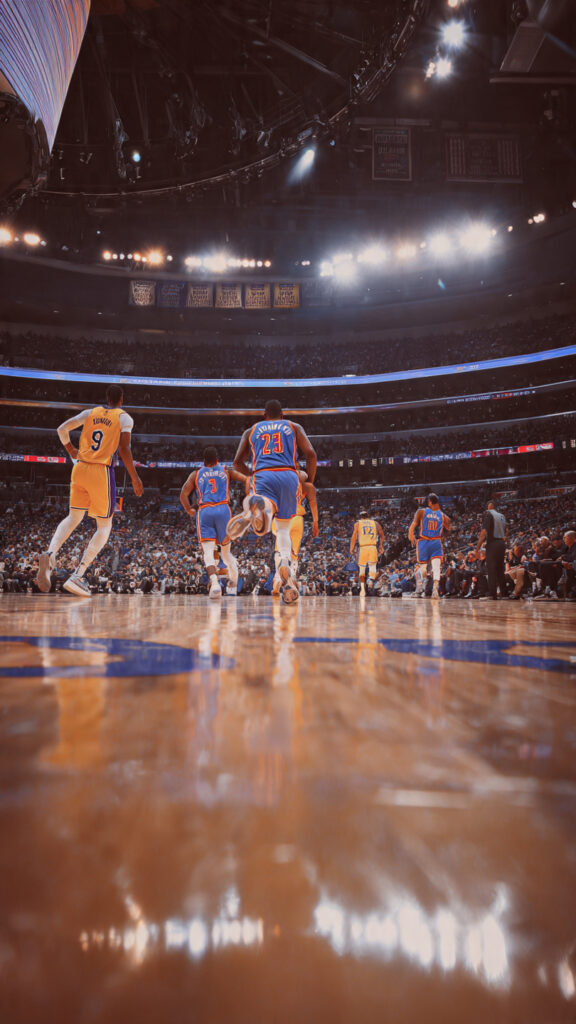
A Thunder vs Lakers game analysis ultimately reveals more than a box score. It exposes a league at an inflection point.
The Thunder represent where the NBA is going dynamic, adaptable, relentless. The Lakers represent what still works experience, control, and star power yet increasingly under strain.
The outcome of this matchup matters. But the underlying message matters more.
Basketball, like geopolitics, rewards those who adapt fastest. And right now, Oklahoma City looks like it’s already playing the next version of the game.