
Javier Aguirre Mexico World Cup 2026 South Africa

Aguirre Demands More From Mexico After Nervy 2-0 Win Over South Africa Opens World Cup at Estadio Azteca
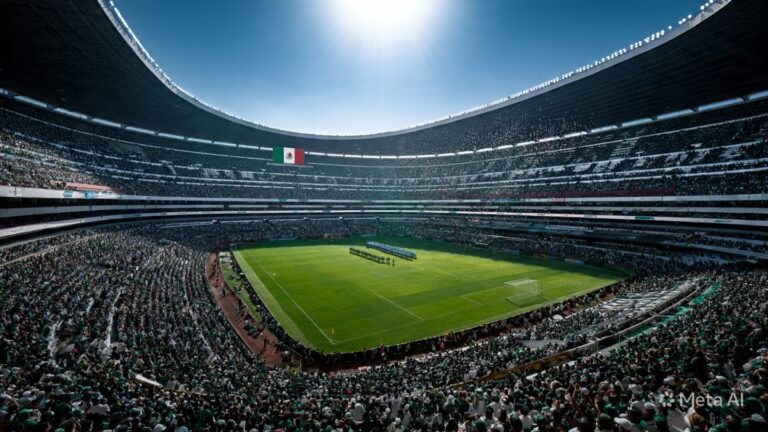
Mexico achieved something they had never managed before on June 11, 2026. They won a World Cup opening match. Eight attempts across six decades, two draws and six defeats in tournament curtain-raisers and El Tri finally broke the curse at the Estadio Azteca in front of 87,000 roaring fans, defeating South Africa 2-0 to launch the 2026 FIFA World Cup in front of the home crowd.
After defeating South Africa 2-0 in the opening match of the 2026 FIFA World Cup, El Tri finally broke their long-standing curse in World Cup openers, earning their first-ever victory in a tournament curtain-raiser. It took an eighth attempt for Mexico to finally claim victory in a World Cup opening match.
But Javier Aguirre did not celebrate like a man satisfied with history. Within minutes of the final whistle, the experienced coach delivered a blunt and direct message: the result was welcome, the performance was not good enough, and South Korea awaits in Guadalajara on June 18 with far more dangerous weapons than South Africa possessed
The Goals Quiñones and Jimenez Deliver for El Tri
Mexico’s opener at Estadio Azteca produced two goals, three red cards, and enough chaos to fill an entire tournament.
Julian Quiñones got the first and helped set up the second as Mexico dominated and downed South Africa in the opening match of the FIFA World Cup 2026. Javier Aguirre’s side took less than five minutes to create the game’s first chance amid an electric atmosphere at Mexico City Stadium. Israel Reyes whipped a cross in from the right, and Raul Jimenez got power behind the bouncing ball, forcing Ronwen Williams to tip it around his post smartly.
The deadlock did not last long. Erik Lira burgled the ball from Sphephelo Sithole, and Quiñones struck it through Williams’ legs from just inside the box a predatory finish that silenced any lingering nervousness inside the Azteca and announced Mexico’s attacking intent to the watching world.
A Colombian dual national, Quiñones the former Club America winger made his debut for the Mexican national team in 2023, and it was met with criticism for not being Mexican. Now, fast forward and he has the first goal for El Tri at the World Cup to ease the nerves.
Raul Jimenez added the second goal later in the match, converting Mexico’s sustained pressure into the margin that made the result comfortable. The Fulham forward had threatened throughout and delivered when his team needed the insurance goal most.
Three Red Cards Turn the Match Into Chaos
The scoreline tells one story. The match itself told a far more complicated one.
South Africa’s individual mistakes proved costly, causing them two red cards and two goals. South Africa tried to impose a dominant possession-based game. However, they made constant mistakes while playing out from the back. As a result, they gifted clear chances to their opponent, who punished them constantly.
South Africa received two red cards through Themba Zwane and Yaya Sithole disciplinary collapses that handed Mexico a significant numerical advantage and transformed the tactical character of the second half entirely. Playing against nine men, Argentina were able to dominate possession and territory in ways that flattered their attacking statistics.
A strange ending to the match saw the referee issue a straight red card to Mexico’s centreback Cesar Montes, bringing the total amount of red cards to three in the game officially more than the two goals scored on the day. That third red card landed on Mexico’s side of the ledger and created an immediate problem beyond the celebration. Mexico head coach Javier Aguirre and his staff will immediately be put to the adjustment test with Cesar Montes officially unavailable for the next game against South Korea.
Losing a key centreback for a match against South Korea one of Asia’s most technically disciplined sides is a serious headache that Aguirre did not need heading into week two.
Aguirre Delivers the Honest Verdict Nobody Expected Immediately After Winning
Coaches who win World Cup matches usually celebrate. Aguirre chose honesty instead.
The veteran manager stood in front of microphones at Estadio Azteca and told reporters directly what he had seen from his own team not just the goals and the victory, but the uncertainty, the hesitancy, and the stretches where Mexico looked like a team still finding its feet on the tournament’s biggest stage.
Aguirre acknowledged that Mexico struggled to impose their preferred style during phases of the contest. Passes that should have connected missed their targets. Decision-making in key moments lacked the sharpness he expects from experienced international players. The team won, but the performance exposed vulnerabilities that stronger opponents will identify and attempt to exploit.
His praise for individual players was genuine Quiñones in particular earned specific recognition for delivering his first international goal at precisely the moment Mexico needed composure but the broader message was unambiguous. A 2-0 win against a ten-man South Africa does not prepare you for South Korea. Only a significantly improved performance will.
The Ochoa Milestone and What It Means for Mexico
Behind the goals and the red cards, a quieter piece of history unfolded at Estadio Azteca on Thursday evening.
40-year-old Guillermo Ochoa was included in Mexico’s 26-man World Cup squad for a potential record sixth World Cup. Ochoa’s presence in goal against South Africa gave him a historic distinction no Mexican player has represented El Tri at six separate World Cup tournaments, and very few goalkeepers anywhere in football history have maintained elite-level performance across that span of a career.
Ochoa was not heavily tested against South Africa. Mexico’s defensive organisation kept the Bafana Bafana attack largely at arm’s length despite the attacking threats South Africa created down the flanks before their players began collecting red cards. But his composure, distribution, and command of the penalty area provided exactly the calm foundation that Aguirre’s side needed during the nervous opening period when Mexico struggled to settle
South Korea Looms A Completely Different Test
Aguirre knows South Korea better than most international coaches. He faced them as Mexico coach at the 2002 World Cup a tournament where the host nation reached the semi-finals in one of football’s most unexpected runs.
Mexico will play South Korea in Guadalajara on June 18. Mexico has played South Korea twice in World Cup history and won both games, in France 1998 and Russia 2018. Those victories provide historical confidence. They do not provide tactical preparation for a completely different tactical challenge than the one South Africa presented.
South Korea is a much different side compared to South Africa, with more tournament experience and more technical quality than some other squads. The two teams last played to a 2-2 draw back in September 2025, and both operate differently in World Cup settings. The Taegeuk Warriors can sometimes operate in a back three. fied as most in need of improvement after Thursday’s match will face a much more disciplined and compact defensive structure from South Korea than anything South Africa offered. The pressing intensity and positional discipline that South Korea maintains throughout 90 minutes demands precisely the kind of consistent execution and sharp decision-making that Mexico failed to produce against a depleted ten-man opponent.
The Montes suspension complicates matters further. Aguirre must rebuild his central defensive partnership before June 18 a problem he did not anticipate entering the tournament, and one that adds genuine tactical uncertainty to an already demanding fixture.
Mexico's Group A Picture and the Road Ahead
Mexico sits atop Group A following their opening win, alongside results from the group’s other matches. Mexico is in Group A with South Africa, South Korea and Czechia, and plays all three group games at home, in Mexico City and Guadalajara. The top two teams in each group advance to the Round of 32, along with the eight best third-place teams.
The home advantage that comes with playing all three group stage matches on Mexican soil represents an extraordinary privilege that no other nation in the 2026 World Cup shares in the same way. Every group game takes place in front of passionate Mexican support at Estadio Azteca for the South Africa and Czechia matches, and at Estadio Akron in Guadalajara against South Korea.
El Tri hasn’t played five games in any of its previous 17 World Cup appearances. Aguirre’s side will be aiming to break that barrier and deliver a historic performance.ico’s famous ceiling of frustration across seven consecutive World Cup appearances from 1994 to 2018 represents the only ambition Aguirre’s squad will accept. The 2022 exit in the group stage under a different coach deepened the national wound. Playing at home in 2026 transforms that wound into motivation.
Whether Mexico can convert home advantage, individual quality, and Aguirre’s honest self-assessment into a genuine deep run begins properly on June 18 in Guadalajara
"Aguirre Delivers the Honest Verdict
The most emotionally charged moment of the entire afternoon belonged not to the goals or the chaos of the red cards, but to Raul Jimenez standing on the pitch at Estadio Azteca with tears streaming down his face after scoring his first-ever World Cup goal. The 35-year-old Wolves striker had waited his entire career for this moment surviving a skull fracture in November 2020 that nearly ended everything, returning to professional football against all medical expectations, rebuilding his career across multiple club moves, and arriving at his fourth World Cup still searching for that defining international goal. Aguirre called it a perfect day for Jimenez, saying he had read an interview where the striker said this had to be his World Cup. “I think he got off to a flying start,” Aguirre said. “He had always been in someone else’s shadow, but today he is a starter for this team and he has truly earned it.” Roberto Alvarado delivered the assist a precise cross from the right that Jimenez met with a clinical header giving the goal a collaborative quality that reflected Mexico’s best attacking combinations of the afternoon. When the net rippled, Jimenez did not sprint away in celebration. He stood still for a moment, let the emotion take over, and then raised both arms toward a stadium roaring its recognition of a man who had refused to let a fractured skull end his World Cup dream.

South Korea Looms
With 104 matches spread across 39 days, knowing how to access the action from wherever you are matters.
In the United States, every match will be broadcast on FOX and FS1, with Spanish-language coverage on Telemundo and Peacock. The FOX Sports app and Fubo TV provide streaming access for cord-cutters who want to watch on mobile or connected devices.
In Canada, TSN, CTV, and RDS carry the English and French-language coverage, with streaming available through the TSN Direct platform. In the United Kingdom, ITV and BBC will split the matches across their free-to-air channels, with streaming via ITVX and BBC iPlayer. Internationally, FIFA’s own streaming options have expanded significantly for 2026, giving fans in regions with limited traditional broadcast coverage digital access to the full schedule.
Conclusion Mexico Win the Opener But Aguirre Knows the Real Work Starts Now
Mexico achieved history on June 11 at Estadio Azteca. They beat South Africa 2-0. They broke their World Cup opening match curse on the eighth attempt. Quiñones scored his first international goal at the tournament. Jimenez delivered the second. Ochoa continued his extraordinary record sixth World Cup participation.
It took an eighth attempt and a sixth as sole participants for Mexico to finally claim victory in a World Cup opening match. The Azteca celebrated appropriately.
Then Javier Aguirre stood in front of the microphones and said something more important than anything the goals or the scoreboard communicated. He told his players and his nation that what they produced on Thursday was not enough. That three red cards from the opposition inflated the margin. That South Korea arrives in six days with a tactical identity, discipline, and quality that South Africa never came close to matching.
The World Cup opening match curse is finally broken. Mexico now faces a more demanding challenge: breaking the Round of 16 curse that has defined and frustrated a generation of supporters who believe El Tri are capable of far more than they have ever produced on football’s biggest stage.
Aguirre believes it too. That is precisely why he refused to celebrate on Thursday night.
Frontier Affairs covers FIFA World Cup 2026, Group A analysis, and international football. This article draws on verified match reporting from FIFA.com, CBS Sports, World Soccer Talk, beIN Sports, Sports Illustrated, and USA Today. Match data current as of June 11, 2026