Messi World Cup goals record 17

Lionel Messi Becomes the All-Time Leading Scorer in Men's World Cup History With Strike Against Austria
Lionel Messi missed a penalty in the ninth minute. Thirty minutes later, he rewrote football history anyway.
Messi scored his 17th career World Cup goal against Austria on Monday, June 22, 2026, at Dallas Stadium in Arlington, Texas, surpassing Germany legend Miroslav Klose to become the outright all-time leading goalscorer in men’s World Cup history. The strike gave Argentina a 1-0 lead in their Group J match and completed a record that took two decades to build.
Messi is now the tournament’s all-time and current edition’s leading goalscorer with 17 and four goals, respectively. He stands alone, ahead of Klose, ahead of Brazil’s Ronaldo Nazário, ahead of Pelé, ahead of every man who has ever played the sport’s biggest tournament.
How the Record-Breaking Goal Happened
The path to history was not straightforward. Messi’s first attempt at the record came in the ninth minute when teammate Lautaro Martínez won a penalty. But the 38-year-old, stuttering in his run-up, put the spot-kick wide of the bottom-right corner to deathly silence at the Dallas Stadium.
For a player who has spent his career delivering in the biggest moments, the miss represented a rare and uncomfortable failure on the sport’s grandest stage. Argentina’s supporters fell silent. Austria’s players sensed an opportunity to keep the record at bay for at least another half.
It did not last. Messi found space on the edge of the box and stroked his shot first time into the bottom-left corner in the 38th minute. The Argentine icon initiated the sequence with a sweeping cross to the left flank before continuing his run, ultimately receiving a clever dummy pass completely unmarked to fire home. The finish was clinical, calm, and instantly recognisable as the signature of a player who has spent two decades defining what World Cup brilliance looks like.
Dallas Stadium erupted. Argentina led 1-0. And Lionel Messi stood alone at the top of football’s most prestigious individual record.
The Numbers Behind the Achievement
The scale of what Messi accomplished becomes clearer when measured against the history he surpassed.
Messi had equalled Miroslav Klose’s all-time mark of 16 World Cup goals by hitting a hat-trick in a 3-0 win over Algeria to open Argentina’s title defence on June 16. That hat-trick the 11th of Messi’s international career but his first at a World Cup tied him with Klose, who built his 16-goal total across four separate tournaments between 2002 and 2014.
Messi reached the same number in six. His Austria strike broke the tie outright.
Having netted his fourth goal at the 2026 World Cup, Messi became just the second player to score four or more goals in three different editions of the tournament, after Klose, who managed five goals in 2002, five in 2006, and four in 2010. Messi scored four in 2014, seven in 2022, and now four more in 2026.
Messi is playing at his sixth World Cup, his first coming in 2006, and he now has 121 goals in 201 games for his country. He has scored in six consecutive World Cup games dating back to 2022 and is the third player to score in six successive World Cups for his country.
A Journey That Began Two Decades Ago
The milestone extends a storybook 20-year World Cup journey that began on June 16, 2006, when an 18-year-old Messi came off the bench against Serbia and Montenegro in Germany and scored his first World Cup goal.
Two decades later, almost to the day, he opened the 2026 tournament with a hat-trick against Algeria, pulling level with Klose on 16 goals and surpassing Brazilian legend Ronaldo’s South American scoring mark in the process. All that remained was one more signature goal to reach the summit of the sport’s most prolific World Cup scorers.
That goal arrived against Austria on Monday completing a journey that began when Messi was a teenager and concludes with him standing, at 38 years old, as the greatest World Cup goalscorer the men’s game has ever produced.
The Emotional Backdrop Behind the Record
Messi’s pursuit of history has unfolded against a backdrop of genuine personal difficulty that few outside his inner circle fully understood until recently.
Messi was tearful after his first goal against Algeria, and it later emerged that his father is recovering from an unspecified health issue. Despite his personal travails and a troubled build-up because of a hamstring niggle, Messi’s mere presence has continued to inspire his teammates throughout the tournament.
That context adds genuine weight to what Messi has produced across Argentina’s opening two matches. A hat-trick delivered through visible emotion. A missed penalty against Austria that could easily have derailed a lesser competitor’s confidence. A record-breaking response delivered less than 30 minutes later. The resilience on display reflects something beyond pure footballing talent.
Teammate Alexis Mac Allister captured the squad’s reliance on their captain directly after the win against Algeria. If anyone thought this group was better off without Leo, today it became clear that Leo is the most important of them all, Mac Allister said.
Messi's Own Words on Joining the Pantheon
Messi addressed the achievement with characteristic humility after the match, reflecting on what it means to stand alongside the players whose records he has now surpassed.
It’s an honour being up there for what it means, being alongside Klose and Ronaldo of Brazil, who is there also, Messi said acknowledging the company he now keeps atop a leaderboard that includes some of the most decorated strikers the sport has ever produced.
The respect runs in both directions. Klose, whose 16-goal record stood since 2014, has long been regarded as one of international football’s most clinical and durable finishers. That Messi required six tournaments rather than four to surpass him speaks to the unique difficulty of accumulating World Cup goals across a career that spans both peak physical years and the increasingly demanding final stages of elite competition.
Why Defending the Record Is Already a Live Question
Records set during an ongoing tournament carry a unique vulnerability — they can be broken again before the trophy is even lifted.
Although Messi holds the record for now, it could yet be broken at this very tournament by Kylian Mbappé. The French forward has 14 goals heading into his own Group I fixture against Iraq on Monday, having already scored twice in the opening win against Senegal. At 27 years old, Mbappé is likely to have at least one more World Cup after this one, if not multiple, giving him a realistic pathway to eventually surpass whatever total Messi finishes 2026 with.
For now, the gap remains comfortable. Messi sits on 17. Mbappé sits on 14, three behind, with Argentina’s remaining group fixtures and any subsequent knockout rounds offering Messi additional opportunities to extend the record further before his international career concludes.
How long Messi holds this record will depend on his own physical fitness and durability over the course of Argentina’s remaining matches, and on whether Mbappé can sustain the scoring pace that has defined his own World Cup performances since 2018.
What This Means for Argentina's Title Defence
Beyond the individual milestone, Messi’s continued scoring form carries direct consequences for Argentina’s ambition to become the first team since Brazil in 1962 to win back-to-back World Cup titles.
Argentina’s 1-0 lead against Austria, built entirely from Messi’s record-breaking strike, extended the captain’s influence over a campaign that has so far delivered maximum returns. A hat-trick against Algeria. A record-breaking goal against Austria. Two matches into the defence of their 2022 title, Argentina’s path forward continues to run directly through their 38-year-old captain.
Few players have defined a tournament the way Messi defined Qatar 2022, when he scored seven goals across the competition, including two in the final, as Argentina defeated France on penalties to claim their third World Cup title. That achievement was widely regarded as the crowning chapter of an already complete career. Monday night in Dallas proved that chapter was not actually the last one Messi intended to write.
Messi Adds a Second for Good Measure as Argentina Seal the Win
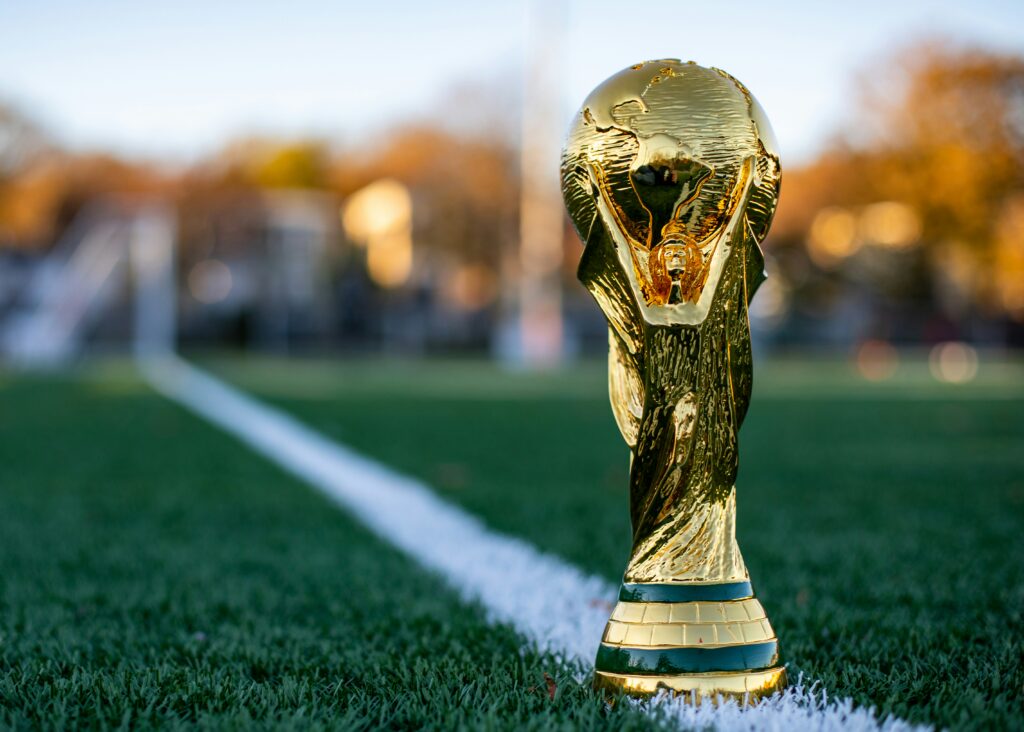
The record-breaking strike was not Messi’s final contribution to the night. He found the bottom corner in stoppage time to complete his brace, sealing a 2-0 victory for Argentina in Dallas and stretching his record two goals clear of Klose rather than just one. The result kept Argentina perfect through two matches and sent a clear message to the rest of the field heading into the knockout stages. Argentina coach Lionel Scaloni, speaking after the match, admitted that explaining Messi’s continued brilliance at 38 years old has become genuinely difficult. “It’s hard to explain, but we’re not surprised by what he does because we see him every day,” Scaloni said in the post-match press conference. “As long as Leo wants to, he’ll be the best. He’s been doing it every match for 20 years. It’s thrilling to watch him, for anyone who loves football. He’s something difficult to explain.” Scaloni was careful, however, not to let the result breed complacency ahead of Argentina’s remaining group fixtures. “We’re not going to get complacent,” he said. “It strengthens us to know that if we do things right and work like we did today, we’ll make it tough for them to beat us.” Argentina now turn their attention to a final group match against Jordan, with the Round of 32 waiting on the other side.
Conclusion Messi's World Cup Story Still Has Pages Left
Lionel Messi entered the 2026 World Cup with 13 career goals across five previous tournaments. He leaves Monday night in Dallas with 17, sole ownership of the most prestigious scoring record in men’s international football, and at least one more group stage match remaining before the knockout rounds begin.
The Inter Miami forward continues to demonstrate the vision, intelligence, and finishing ability that have defined his career across two decades and six World Cups. Regardless of what happens next in the tournament, he has already achieved something no player in World Cup history has managed before.
Until further notice, the greatest tournament in football has a new all-time leading scorer. His name is Lionel Messi. And with Argentina’s title defence very much alive, he may not be finished yet.
Frontier Affairs covers FIFA World Cup 2026, Group J analysis, and individual records across international football. This article draws on verified breaking news reporting from Al Jazeera, Sky Sports, ESPN, CBS Sports, the Olympics official website, and Bolavip. Match data current as of June 22, 2026.