FIFA World Cup 2026
The wait is finally over. After years of qualification battles, format debates, and anticipation that has stretched across four years, the 2026 FIFA World Cup is here and it arrives unlike anything football has ever seen before.
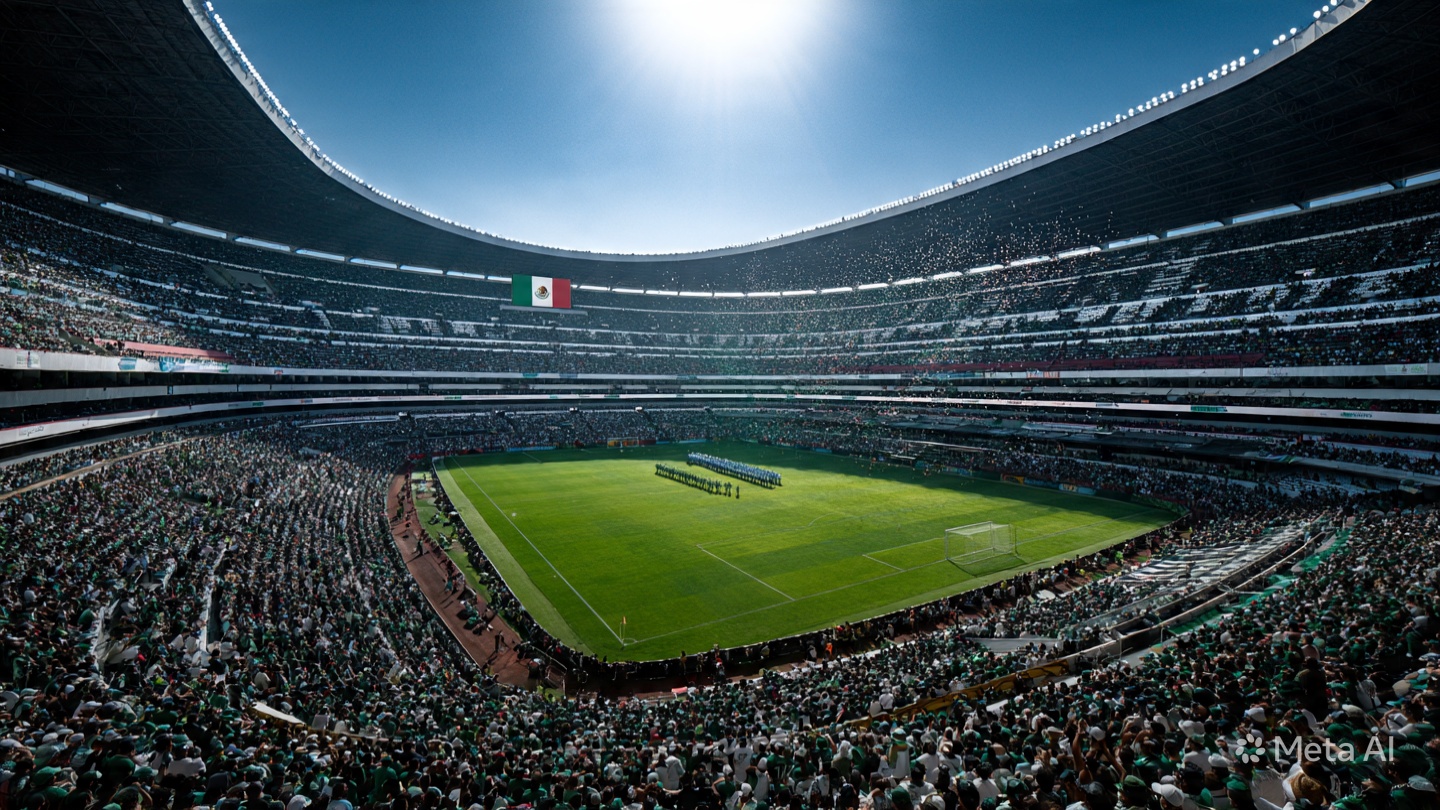
The FIFA World Cup 2026 kicks off on Thursday, June 11, 2026, at the iconic Estadio Azteca in Mexico City, where hosts Mexico face South Africa in the tournament opener. From that first whistle in Mexico City to the final at MetLife Stadium in New Jersey on July 19, the world’s most watched sporting event will unfold across three nations, 16 cities, and 104 matches that promise to redefine what a football tournament can look like.
This is not just another World Cup. It is a historic expansion, a continental celebration, and a competition loaded with the kind of talent that only appears once a generation. Here is everything you need to know.
A Tournament Unlike Any Before The Numbers That Tell the Story
The scale of FIFA World Cup 2026 is the first thing that separates it from every previous edition.
For the first time in the tournament’s history, 48 teams will compete in the world’s biggest football tournament, up from the 32-team format in place since France 1998, itself an expansion from 24 teams between 1982 and 1994. The expansion means 16 additional nations get their moment on the sport’s biggest stage countries that have never experienced a World Cup before, competing against the giants who have won it multiple times.
The 48 teams are split into 12 groups of four. Each team plays three group-stage matches. The top two teams in each group advance to the knockout stage, along with the eight best third-place teams meaning 32 nations survive the group stage, more than ever before.An estimated six billion people are expected to follow the 2026 World Cup across television and social media platforms a number that would make it the most watched sporting event in human history.
Key Dates From Opening Whistle to Final Whistle
Planning your viewing schedule starts with knowing the tournament’s structure. Here are the critical dates:
The group stage runs from June 11 through June 27. The Round of 32 takes place from June 28 to July 3. The Round of 16 follows from July 4 to July 7. The quarter-finals are scheduled for July 9 to July 11. The semi-finals fall on July 14 and 15. The third-place match is on July 18, and the World Cup Final takes place on July 19, 2026. That is 39 days of continuous football, with multiple matches on most days throughout the group stage a wall-to-wall schedule that means fans across every time zone will rarely go more than a few hours without a game worth watching.
The Host Cities and Iconic Venues
One of the most distinctive features of this World Cup is the geography. Spreading 104 matches across three countries and 16 cities creates a tournament with no single centre instead, the action flows from the mountains of Mexico to the coasts of Canada, with the United States handling the bulk of the schedule in between.
The final will be held at MetLife Stadium in East Rutherford, New Jersey, on July 19. Estadio Azteca in Mexico City hosts the opening match becoming the first stadium in history to host games at three separate men’s World Cups. AT&T Stadium in Dallas and Mercedes-Benz Stadium in Atlanta will host the semi-finals. Miami hosts the third-place match.
AT&T Stadium in Arlington, Texas, and Mercedes-Benz Stadium in Atlanta will host the most games at nine apiece. MetLife Stadium in New Jersey and SoFi Stadium in Inglewood, California, each host eight matches. Canada hosts matches at BC Place in Vancouver and a stadium in Toronto. Mexico’s three host cities are Mexico City, Monterrey, and Guadalajara. The United States carries 11 of the 16 host cities, reflecting its role as the primary host nation in a partnership where each country brings something distinct to the tournament’s identity.
How the Home Nations Are Set Up
Three of the 48 competing nations are also hosting the tournament a circumstance that adds a layer of political complexity and home-crowd energy to every match they play.
The United States opens its campaign against Paraguay on June 12 at SoFi Stadium in Los Angeles. Canada begins against Bosnia and Herzegovina on June 12 in Toronto. Mexico kicks off the entire tournament against South Africa at Estadio Azteca on June 11.
The USMNT are priced at +6000 as longshots to win on home soil, with co-host Mexico also at +6000 and Canada at +17,500. The odds reflect realistic assessments of their chances, but all three nations will carry home crowd support that money cannot easily quantify and at a World Cup, home advantage has a long history of producing upsets
The Teams Favoured to Win It All
The championship favourites entering the tournament represent a mix of European heavyweights and South American contenders — with one defending champion determined to prove history can repeat itself.
Spain, France, England, Argentina, and Brazil head the list of favourites to win the 2026 World Cup, along with Portugal, who have never won the tournament despite producing some of football’s greatest individual talents.
Spain carries the shortest odds to reach the World Cup Final. France, led by Golden Boot favourite Kylian Mbappé and 2025 Ballon d’Or winner Ousmane Dembélé, arrives with the talent of a champion and the painful memory of a penalty-shootout loss to Argentina in 2022.
Reigning champion Argentina, led by Lionel Messi, is priced at +1000 as they seek to become the first back-to-back winners since Brazil in 1962. Messi, attending his sixth World Cup and now in his late thirties, remains Argentina’s creative fulcrum and one of the tournament’s most closely watched players regardless of how the odds read
The Golden Boot Race Mbappé, Kane, Haaland, and Messi
Individual glory runs alongside team ambition at every World Cup, and the race for the Golden Boot in 2026 is as competitive as it has ever been.
Kylian Mbappé leads the Golden Boot odds at +600, followed by Harry Kane at +700, Erling Haaland at +1400, and Lionel Messi at +1600.
Mbappé arrives in North America as the reigning Golden Boot holder from 2022, when he scored eight goals including a hat-trick in the final. He led all La Liga players in 2025-26 in goals with 25, shots with 146, and shots on target with 63 while playing for Real Madrid. Manager Didier Deschamps has deployed him both on the left and as a striker, giving him multiple ways to impact matches and making him difficult for opponents to plan against.
Kane is the other genuine challenger. He arrives at the World Cup having scored 61 goals across all competitions for Bayern Munich in the 2025-26 season a remarkable tally that underlines his status as one of the most clinical finishers the game has produced. England has the squad depth to go deep in this tournament, and a Kane playing at this level could finally deliver the international trophy his career has long deserved
The Players Who Could Define This Tournament
Beyond the favourites, every World Cup produces its own unexpected story the teenager nobody predicted, the veteran who saved his best for last, the nation that travels further than anyone imagined.
Spain’s Lamine Yamal is expected by almost every analyst to win the best young player award, with seven of ESPN’s writers selecting him for the honour before a ball had been kicked. At 18 years old, Yamal enters the tournament already considered one of Europe’s most exciting attacking talents and a World Cup stage in North America could introduce him to the billions of fans who will be watching.
Erling Haaland brings Norway to a tournament they have not attended since 1998 and carries personal motivation that transcends the team’s relatively modest ambitions. The Manchester City striker has already surpassed 100 Premier League goals and helped his club win its first-ever Champions League trophy, with a goal rate that is described simply as incredible.

How to Watch Every Match Broadcasting Guide
With 104 matches spread across 39 days, knowing how to access the action from wherever you are matters.
In the United States, every match will be broadcast on FOX and FS1, with Spanish-language coverage on Telemundo and Peacock. The FOX Sports app and Fubo TV provide streaming access for cord-cutters who want to watch on mobile or connected devices.
In Canada, TSN, CTV, and RDS carry the English and French-language coverage, with streaming available through the TSN Direct platform. In the United Kingdom, ITV and BBC will split the matches across their free-to-air channels, with streaming via ITVX and BBC iPlayer. Internationally, FIFA’s own streaming options have expanded significantly for 2026, giving fans in regions with limited traditional broadcast coverage digital access to the full schedule.
The Economic Scale Nobody Is Talking About Enough
The FIFA World Cup 2026 is not just a sporting event. It is one of the largest economic mobilisations in the history of North American sports.
Gambling Capital projects roughly $60 billion in legal sportsbook wagers on the 2026 World Cup. Measured in sportsbook handle, the World Cup is expected to generate more than 30 Super Bowls’ worth of betting activity packed into one tournament. Prediction-market platforms have already generated more than $3 billion in trading volume in the days before the tournament began.
Hotel prices in host cities have risen sharply. Transport infrastructure in New York, Los Angeles, Dallas, and Atlanta has been upgraded specifically to handle the crowds. FIFA itself is operating on a prize money pool that reflects the expanded scale of the competition and the record broadcast rights deals that will deliver the tournament to billions of viewers worldwide.
Why North America Is the Perfect Stage for This Moment
It seems almost perfect that the biggest football tournament should arrive at the gates of North America for the first time in 2026. As a collective trio of countries, the US, Canada, and Mexico represent some of the most rapidly growing footballing markets in the entire world, a continent where the sport has transitioned from being peripheral in culture to being at the center of the sporting world in one generation. The 2026 World Cup marks the first time in World Cup history that a tournament will feature three host countries at once, thus dispersing the effects of hosting across a whole continent as opposed to concentrating them in a single nation. To all the many immigrants from passionate football-playing countries, the Brazilians of Toronto, the Mexicans of Los Angeles, the Argentinians of New York, the Nigerians of Houston, this tournament will be arriving right on their doorstep in more ways than one. No international travel will be needed to see their team play. They can simply drive to the venue. This unique combination of fervent supporters, top infrastructure, and three host countries sharing a common passion for football makes for an unprecedented atmosphere that no one-nation World Cup can
Conclusion FIFA World Cup 2026 Is Football's Biggest Moment Yet
Every four years, the FIFA World Cup reminds the world that football is not just a sport. It is a shared language spoken by billions of people across every culture, every continent, and every political divide the planet has managed to construct.
The 2026 edition arrives with more teams, more matches, more host cities, and more potential for the kind of unforgettable moment that defines careers and generations than any tournament before it. The expansion from 32 to 48 teams means nations that have never experienced this stage before will step onto it and some of them will produce the surprises that nobody sees coming but everybody remembers forever.
The opening match on June 11 at Estadio Azteca a venue already holding two World Cup finals in its history is a symbolic statement about what this tournament represents. The final on July 19 at MetLife Stadium will write the newest chapter.
Between those two bookends, 104 matches and 48 nations will determine who lifts the trophy. Whatever happens between now and July 19, the world will be watching.
Frontier Affairs covers global sports, international tournaments, and the cultural significance of football. This article draws on verified data from Al Jazeera, ABC News, Good Morning America, ESPN, FOX Sports, CBS Sports, USA Today, and official FIFA and tournament scheduling sources.